Sri Lanka's transport network is a fascinating mix of colonial-era railways, chaotic bus systems, ubiquitous tuk-tuks, and an emerging private hire market. As a tourist, you have more options for getting around than almost any other country in South Asia. But choosing the right option for the right situation can mean the difference between a magical travel experience and a frustrating, uncomfortable ordeal. Let's explore every mode of transport available and when each one truly shines.
Sri Lanka's Bus Network: Cheap, Extensive, and Chaotic
Sri Lanka has one of the most extensive bus networks in Asia. Government-operated CTB (Central Transport Board) buses and private bus companies connect virtually every town and village in the country. A cross-country journey of 200+ kilometres rarely costs more than LKR 500 ($1.50 USD). The network runs from about 5 AM to 9 PM, with high-frequency services on major routes. You can get almost anywhere by bus if you're patient and adventurous.
The Reality of Riding Sri Lankan Buses
Here's the unvarnished truth: Sri Lankan buses are not for the faint of heart. Buses are frequently overcrowded, with passengers packed standing in the aisles. They drive aggressively, overtaking on blind corners and braking suddenly. Air conditioning is rare on non-intercity services. Luggage space is minimal, meaning your backpack sits on your lap or in the aisle. Route information is displayed in Sinhala, so knowing which bus to take requires either asking locals or using the PickMe app's public transport feature. For short, urban hops, buses are fine. For multi-hour journeys with luggage, they're an endurance test.
Sri Lanka's Train System: The Scenic Jewel
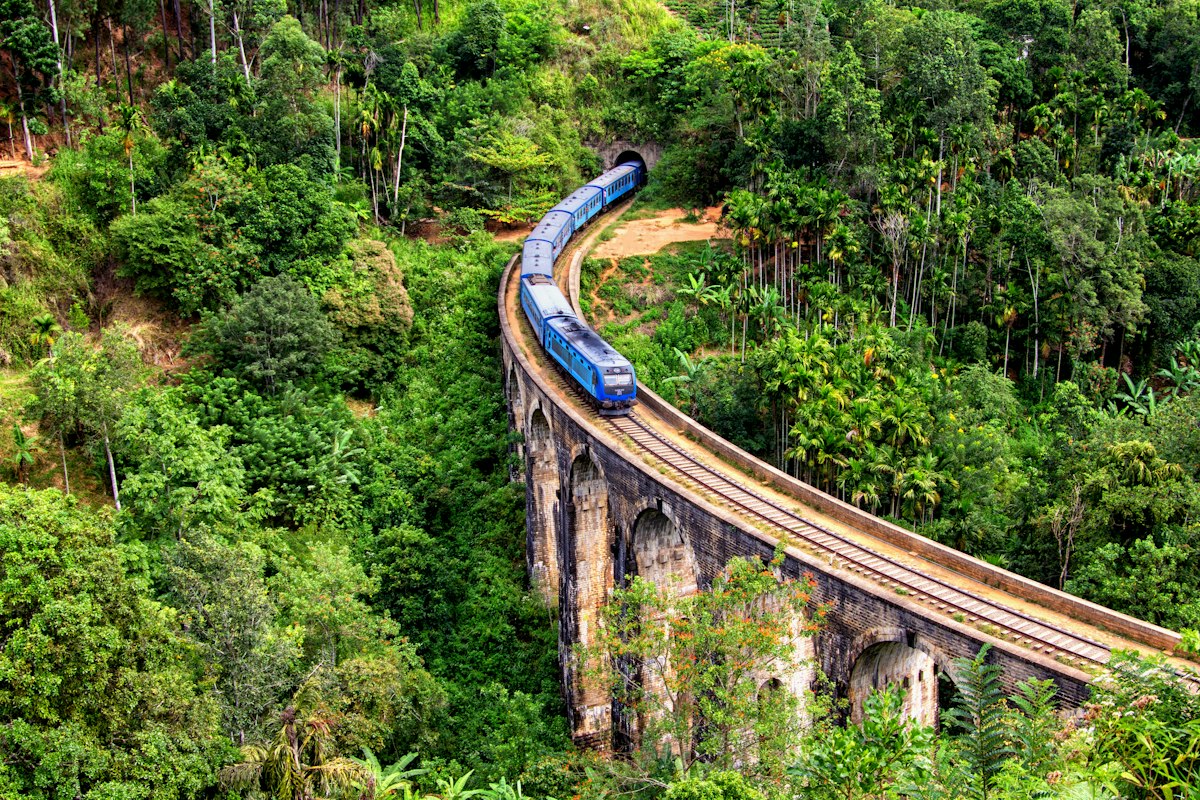
Sri Lanka's railway system is the one form of public transport that every tourist should experience at least once. Built by the British in the 1860s, the network covers major routes including Colombo to Kandy, Kandy to Ella (the famous hill country route), and Colombo to Galle along the coast. The trains are slow, rarely exceeding 40 km/h on mountain routes, but that's precisely the point. The journey is the destination, with breathtaking views of tea plantations, waterfalls, misty valleys, and the iconic Nine Arch Bridge near Ella.
The Famous Kandy to Ella Railway
The Kandy to Ella train journey is consistently ranked among the most scenic railway journeys in the world. The full journey takes approximately 6-7 hours and passes through Nanu Oya (Nuwara Eliya), Haputale, and some of Sri Lanka's most dramatic mountain scenery. First-class observation cars offer the best views and guaranteed seating for around LKR 1,500 ($5 USD), but they sell out weeks in advance during peak season. Second-class reserved seats cost around LKR 600 ($2 USD) and offer a similar experience. Third-class unreserved is dirt cheap but can be extremely crowded.
- Book first-class or second-class reserved tickets 30 days in advance via the Sri Lanka Railways website
- The Ella to Kandy direction (eastbound morning departure) offers the best lighting for photography
- Sit on the right side when heading from Kandy to Ella for the best valley views
- Bring snacks and water; the onboard food selection is limited
- Don't hang out of the doors for photos unless you're very confident on your feet; the curves are sharp
Tuk-Tuks: The Quintessential Sri Lankan Experience
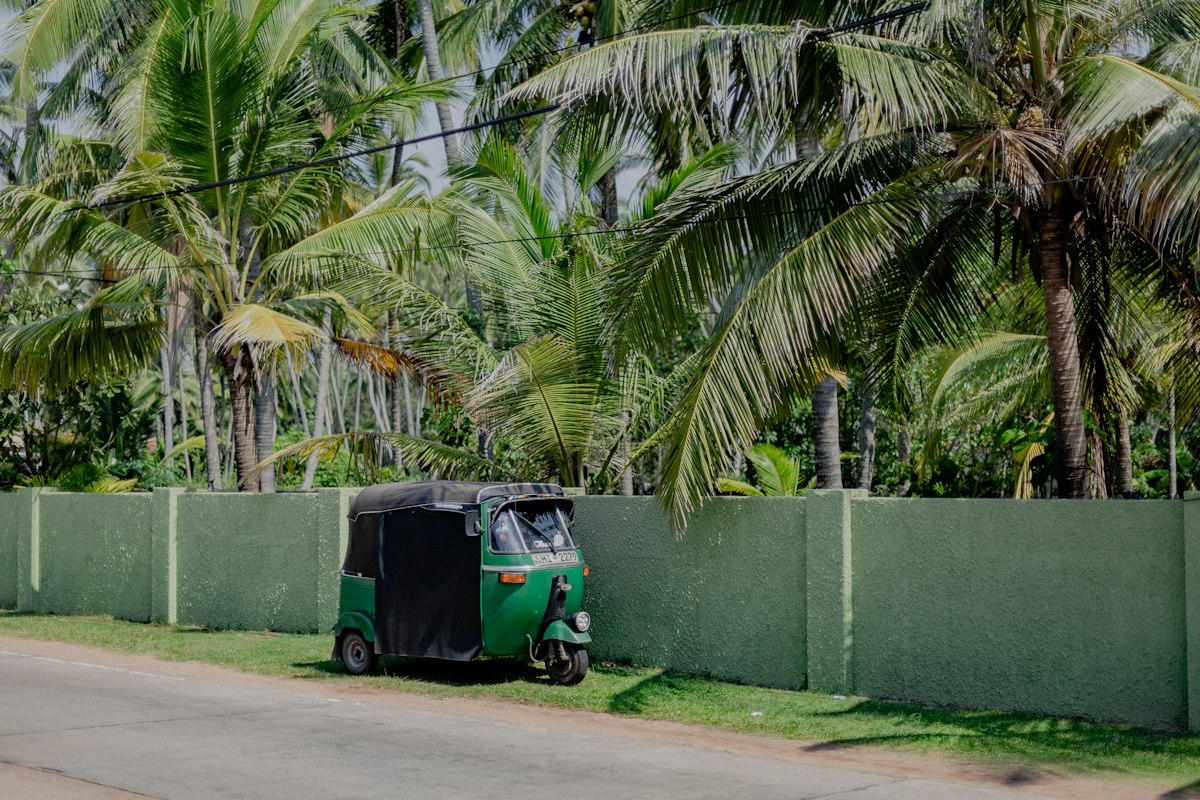
Tuk-tuks (three-wheelers) are everywhere in Sri Lanka. They function as short-distance taxis in cities and towns, and many tourists use them for day trips of 30-50 kilometres. A tuk-tuk ride within a city typically costs LKR 200-500 ($0.60-1.50 USD). For longer journeys, you'll negotiate a flat rate. Tuk-tuks are fun, photogenic, and perfect for short hops. However, they're open-sided, offer no crash protection, have no luggage space, and become uncomfortable after 30 minutes on bumpy roads. They're also not air-conditioned, which matters when it's 35 degrees Celsius.
Private Cars and Vans: The Comfort Option
Private vehicles with a driver represent the most comfortable and flexible way to explore Sri Lanka. You get a modern, air-conditioned car (typically a Toyota Axio or Honda Fit for couples) or van (Toyota HiAce for families/groups), a professional driver, and complete control over your itinerary. Costs range from $45-75 USD per day for a car and $65-100 USD per day for a van, all-inclusive. The driver handles all navigation, parking, fuel, and logistics, leaving you free to enjoy the scenery and experiences.
When Public Transport Wins
Public transport isn't just a budget option; there are genuine situations where it's the superior choice. The Kandy-Ella train is a must-do experience that no private vehicle can replicate. The coastal train from Colombo to Galle hugs the shoreline in ways the expressway cannot. The short bus ride from Dambulla to Sigiriya is cheap and easy. Even local tuk-tuks are perfect for popping out to a nearby restaurant or market. The key is knowing when public transport adds to your experience versus when it detracts from it.
When Private Transport Wins
Private transport is clearly superior for multi-destination itineraries, family travel, luxury travel, and any trip where time is limited. If you're trying to cover Colombo, Sigiriya, Kandy, Ella, and Galle in 10 days, relying on public transport would waste hours at bus stations and train platforms, leave you stranded in some locations, and require carrying all your luggage at every transfer. A private vehicle with driver lets you move seamlessly between destinations, store luggage in the car, and adjust your schedule on the fly.
Families with Children
For families with young children, private transport isn't just convenient; it's practically essential. Sri Lankan buses don't have car seat attachments, trains can be dangerously crowded, and tuk-tuks have no seatbelts. A private vehicle can be equipped with proper child seats, has air conditioning to keep kids comfortable, allows for flexible stop schedules (nap times, bathroom breaks, snack stops), and provides a safe, enclosed environment throughout the journey.
The Best of Both Worlds
Our recommendation for most tourists is a hybrid approach: use a private vehicle with driver as your primary transport, but deliberately incorporate the Kandy-Ella train journey and perhaps the coastal railway into your itinerary. Your driver can meet you at the other end, having driven the car to your destination while you enjoyed the scenic train ride. This way, you get the comfort and flexibility of private transport with the unforgettable experience of Sri Lanka's railway heritage. It's the approach that consistently produces the happiest travellers.
Cost Comparison at a Glance
- Public bus cross-country: LKR 300-800 ($1-2.50 USD) per journey
- Train second-class reserved: LKR 400-1,000 ($1.25-3 USD) per journey
- Train first-class observation: LKR 1,500-2,000 ($5-6.50 USD) per journey
- Tuk-tuk short hop: LKR 200-500 ($0.60-1.50 USD)
- Tuk-tuk half-day hire: LKR 3,000-5,000 ($10-16 USD)
- Private car with driver: LKR 14,000-22,000 ($45-75 USD) per day
- Private van with driver: LKR 20,000-30,000 ($65-100 USD) per day